Everyday story illustration finds visual interest in familiar places and small actions: a room, a walk, a meal or a moment of rest.
When to use these styles
Try these styles for lifestyle writing, personal essays and scenes of ordinary companionship. The emotional tone often comes from light, distance and the arrangement of objects.
Prompting tip
Choose one moment rather than summarizing an entire day. Name a setting, an action and a small detail that makes the scene feel specific.
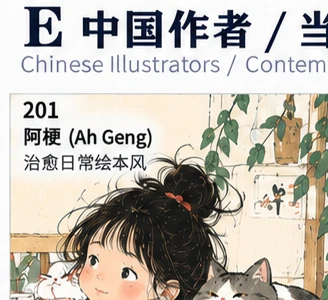
Fine black lines and warm washes describe a round-eyed figure with loose hair; plants and everyday objects create an intimate scene on ivory paper. Preserve translucent layers, paper luminosity and natural wet edges. Reserve dark values for the focal point; separate subject and supporting elements by scale and clarity.
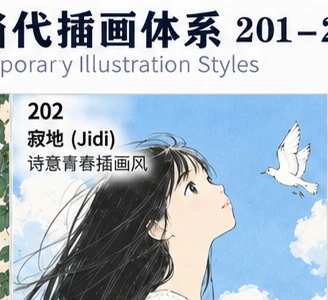
A light profile faces a bright open sky; flowing hair and generous space guide the gaze through pale blue and warm skin tones. Preserve translucent layers, paper luminosity and natural wet edges. Reserve dark values for the focal point; separate subject and supporting elements by scale and clarity.
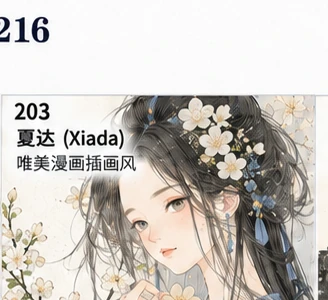
Fine lines trace a soft face and layered hair; small flowers, pale garments and gentle light form a delicate classical portrait. Subordinate detail to large forms and visual hierarchy. Preserve readable contours, a focused palette and varying ornament density.
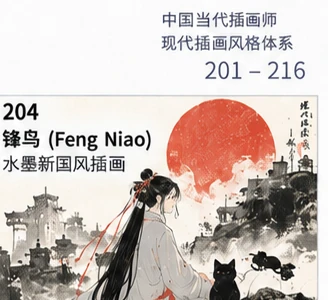
Black-gray ink abstracts layered roofs and a flowing figure; one vermilion circular glow anchors the composition through wet and dry brushwork. Shape the image with wet-dry ink, varied stroke weight and open paper. Let the main gesture follow the brush rhythm, with only supporting local color.
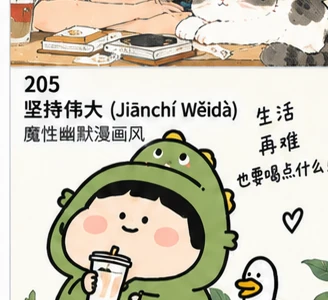
A large round head, tiny body, dot eyes and pink cheeks form a composed character; firm outlines and muted flat fills support a small humorous contrast. Keep organic line variation and no more than three flat colors. Focus the joke on one gesture or object relationship; simplify the background.
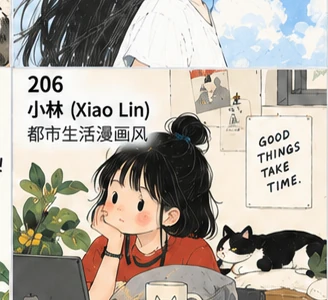
Fine ink sketches an expressive everyday figure; window light, plants and personal objects complete the setting with a small red accent on warm paper. Preserve translucent layers, paper luminosity and natural wet edges. Reserve dark values for the focal point; separate subject and supporting elements by scale and clarity.
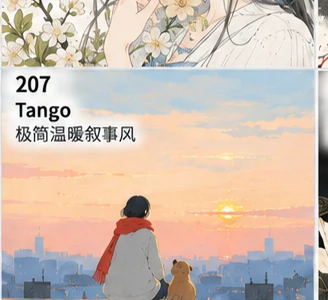
A back-facing figure stands between open sky and a distant city; warm pink-orange dusk and soft blue layers suggest companionship and anticipation. Visible brushwork connects form and setting. Guide the eye with temperature and value; keep the focal detail clear and simplify distant edges.
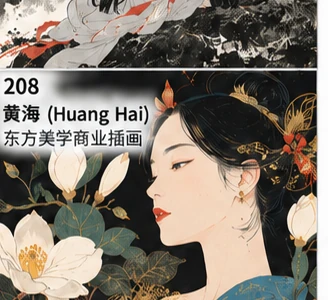
An elegant profile interlocks with broad floral shapes; black, ivory and restrained warm accents balance fine local detail within a clear poster composition. Subordinate detail to large forms and visual hierarchy. Preserve readable contours, a focused palette and varying ornament density.
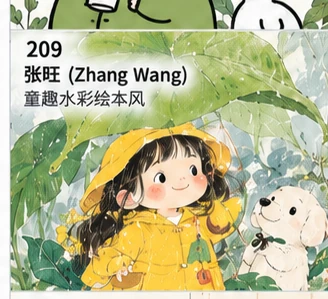
A rounded small figure contrasts with oversized leaves; transparent greens and warm yellow washes, soft edges and droplets create fresh curiosity. Preserve translucent layers, paper luminosity and natural wet edges. Reserve dark values for the focal point; separate subject and supporting elements by scale and clarity.
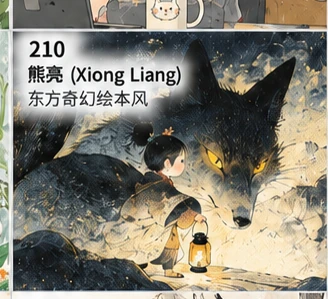
A tiny figure meets a huge creature among ink-textured rocks; layered dark washes build depth while one warm light adds tenderness. Shape the image with wet-dry ink, varied stroke weight and open paper. Let the main gesture follow the brush rhythm, with only supporting local color.
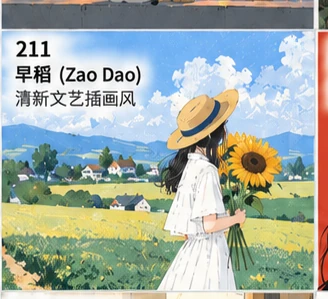
Light painterly strokes place a figure in open fields; blue skies and bright yellow-green vegetation create a fresh, leisurely daylight scene. Visible brushwork connects form and setting. Guide the eye with temperature and value; keep the focal detail clear and simplify distant edges.
Clear ink defines an urban figure and bold accessories; warm red against dark green-black and subtle print texture create retro street attitude. Treat paper grain and slight edge irregularities as controlled details. Limit the main colors and preserve a clear subject and breathing space rather than covering everything in texture.
Medium black outlines enclose a rounded animal; warm orange, cream and pale blue flat fills support a cozy, affectionate everyday gesture. Keep organic line variation and no more than three flat colors. Focus the joke on one gesture or object relationship; simplify the background.
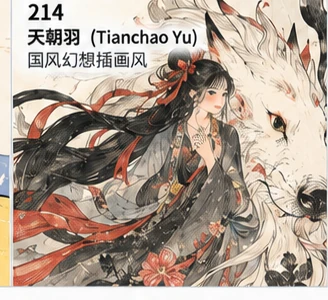
Dense flowing lines connect garments and fantasy creatures; red, black, gray and paper white support long sweeping curves and intricate local detail. Subordinate detail to large forms and visual hierarchy. Preserve readable contours, a focused palette and varying ornament density.
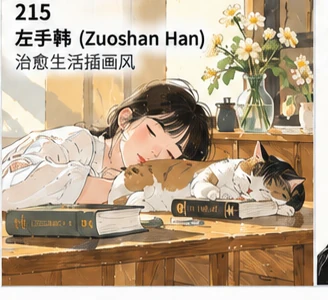
Soft window light falls on a resting figure and quiet objects; warm wood tones and muted washes create an unhurried everyday moment. Preserve translucent layers, paper luminosity and natural wet edges. Reserve dark values for the focal point; separate subject and supporting elements by scale and clarity.
Crisp black lines and broad dark clothing shapes frame simplified features; a softly colored bouquet or small object creates a relaxed modern contrast. Organize the image through contours and empty space. Make the main gesture immediately readable, with restrained color accents and no heavy shading.