Storybook illustration brings a sense of narrative to a still image. Gentle textures, expressive characters and carefully placed details invite the viewer into a small world.
When to use these styles
Use these references for children’s stories, reflective articles and scenes about companionship or discovery. Compare watercolor, pencil and flat painted treatments before choosing.
Prompting tip
Give the character a specific action and one meaningful object. State whether you want open space for an editorial layout or a fuller environment.
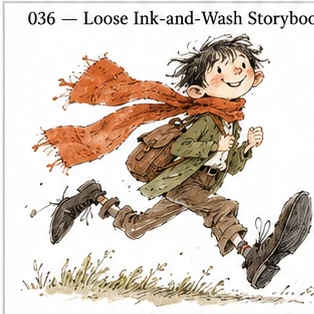
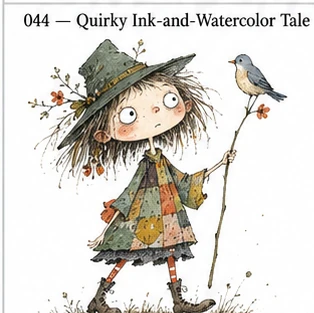
Quivering pen strokes capture exaggerated limbs and shifting balance; loose washes occasionally escape the outlines for lively storybook motion. Preserve translucent layers, paper luminosity and natural wet edges. Reserve dark values for the focal point; separate subject and supporting elements by scale and clarity.
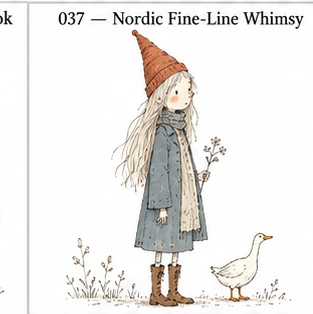
Light fine ink defines rounded unusual characters in a quiet natural setting; sparse textures and ample space create tender solitude. Use line density to distinguish values and materials while preserving a readable silhouette. Reduce background texture so the image does not collapse into uniform gray.
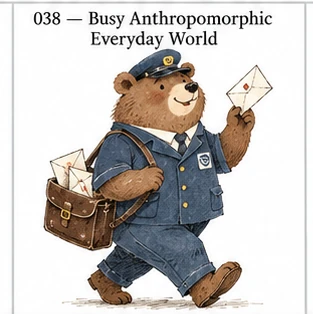
Rounded animals in everyday clothes perform familiar tasks; clear gestures and small props organize a busy, brightly colored miniature society. Unify figures and setting through a consistent shape language and simple depth layers. Let color support the mood and concentrate detail around interaction and expression.
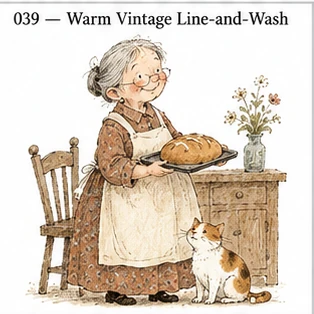
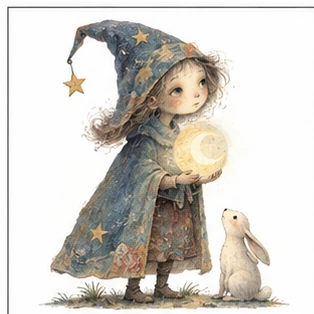
Fine ink and muted washes depict quiet characters; warm paper tones, soft edges and modest gestures evoke a friendly vintage book. Preserve translucent layers, paper luminosity and natural wet edges. Reserve dark values for the focal point; separate subject and supporting elements by scale and clarity.
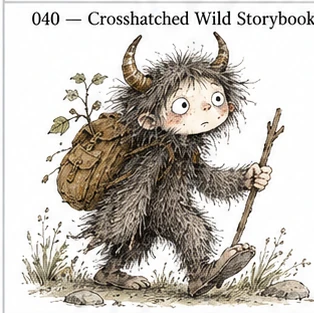
Fine hatching builds fur and foliage; exaggerated yet friendly creatures dwarf small figures, creating a tactile and adventurous fairytale. Use line density to distinguish values and materials while preserving a readable silhouette. Reduce background texture so the image does not collapse into uniform gray.
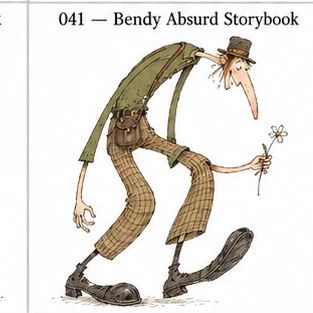
Stretch necks, structures and plants into springy curves; extreme proportions and improbable balance create a flowing, absurd storybook world. Unify figures and setting through a consistent shape language and simple depth layers. Let color support the mood and concentrate detail around interaction and expression.
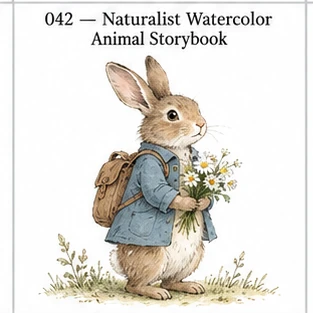
Observe believable animal anatomy, fur markings and small plants; delicate transparent washes build gentle volume with a classical naturalist quality. Preserve translucent layers, paper luminosity and natural wet edges. Reserve dark values for the focal point; separate subject and supporting elements by scale and clarity.
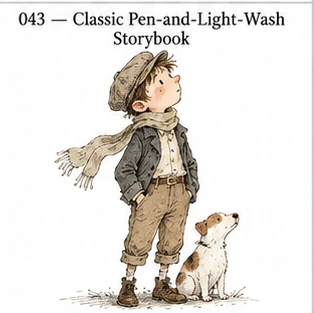
Fine sketchy pen lines describe graceful gestures; pale washes cover selected areas while exposed paper and light contours establish space. Preserve translucent layers, paper luminosity and natural wet edges. Reserve dark values for the focal point; separate subject and supporting elements by scale and clarity.
Uneven proportions and crooked props form a quirky miniature tale; hesitant ink marks meet soft, irregular watercolor layers. Preserve translucent layers, paper luminosity and natural wet edges. Reserve dark values for the focal point; separate subject and supporting elements by scale and clarity.
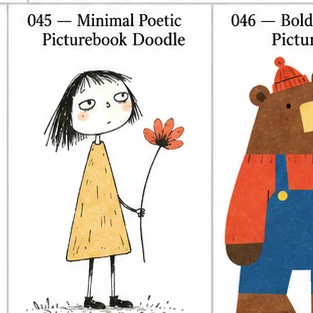
Tiny figures drawn in a few strokes meet one surreal prop; loose color accents and expansive blank space create a poetic miniature. Organize the image through contours and empty space. Make the main gesture immediately readable, with restrained color accents and no heavy shading.
Triangles, curves and large saturated shapes form characters; iconic facial marks and contrasting silhouettes make every action immediately readable. Build hierarchy with clear large shapes, color planes and negative space. Limit ornament; keep the main silhouette recognizable at thumbnail size.
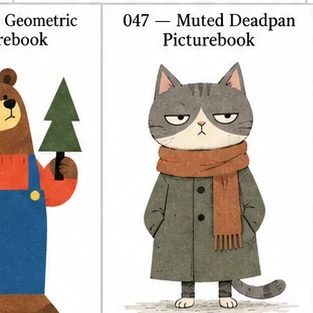
Simplified animals with half-closed eyes sit in muted brown-green and blue-gray; stillness contrasts with a quietly strange situation. Unify figures and setting through a consistent shape language and simple depth layers. Let color support the mood and concentrate detail around interaction and expression.
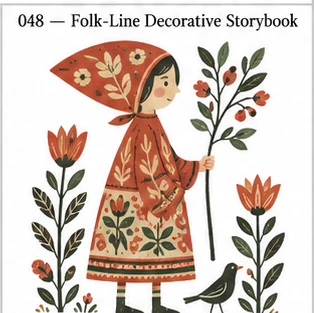
Fine folk-inspired botanical patterns frame unusual figures; vintage colors and rhythmic decoration support rather than obscure the main action. Unify figures and setting through a consistent shape language and simple depth layers. Let color support the mood and concentrate detail around interaction and expression.
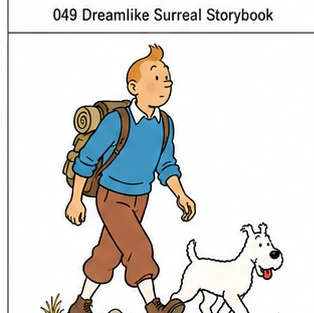
Slightly distorted figures inhabit unusual spatial relationships; soft hand-drawn edges and muted blue-gray neutrals create a quiet dreamlike narrative. Visible brushwork connects form and setting. Guide the eye with temperature and value; keep the focal detail clear and simplify distant edges.
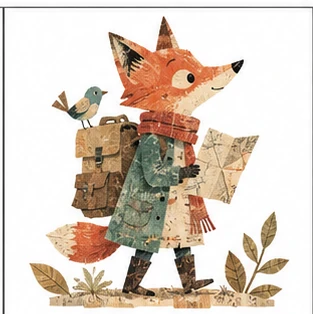
Torn paper edges, layered colored scraps and fine print grain construct characters; overlaps provide depth in a warm nostalgic palette. Treat paper grain and slight edge irregularities as controlled details. Limit the main colors and preserve a clear subject and breathing space rather than covering everything in texture.
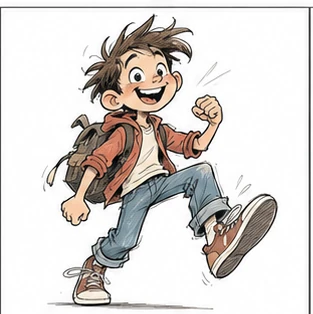
Quick pencil or ink captures brows, mouths and body balance; exaggerated acting remains structurally clear, with sparse washes supporting personality. Organize the image through contours and empty space. Make the main gesture immediately readable, with restrained color accents and no heavy shading.
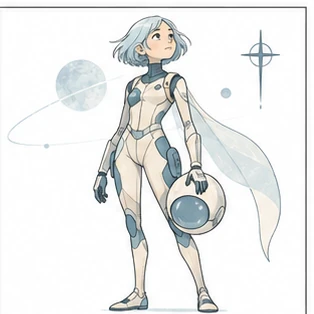
Clean fine lines, elongated figures and simple futuristic garments; pale blue-gray and neutral washes leave spacious, quietly unfamiliar surroundings. Organize the image through contours and empty space. Make the main gesture immediately readable, with restrained color accents and no heavy shading.
Even closed outlines and clean flat fills describe characters and props; distinct poses and clear depth layers replace complex shading. Build hierarchy with clear large shapes, color planes and negative space. Limit ornament; keep the main silhouette recognizable at thumbnail size.
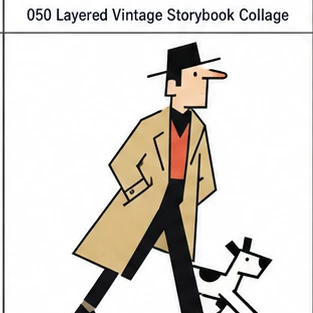
Circles, rectangles and arcs organize figures and surroundings; architectural clothing shapes, flat colors and measured spacing establish modernist order. Build hierarchy with clear large shapes, color planes and negative space. Limit ornament; keep the main silhouette recognizable at thumbnail size.
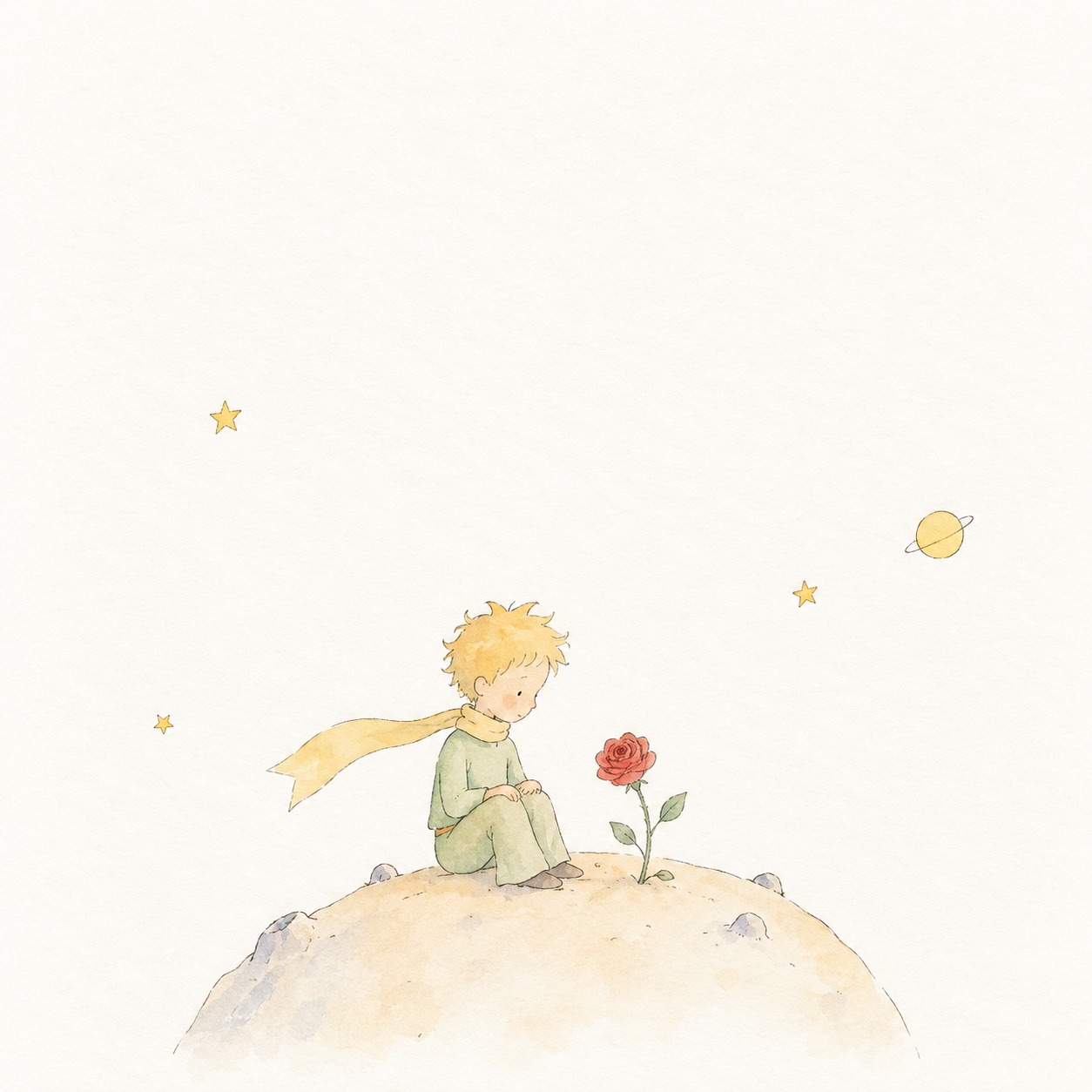
Slightly uneven fine contours describe a small, naive figure. Transparent pale watercolor preserves luminous paper and softly feathered wet edges. Straw yellow, sage green and washed blue remain sparse; at least half of the composition is open paper. One quiet gesture and one or two objects convey companionship, waiting or inner feeling with tenderness, wistfulness and hope.