Poetic Watercolor with Open Space
An illustration style reference with a customizable AI art prompt.
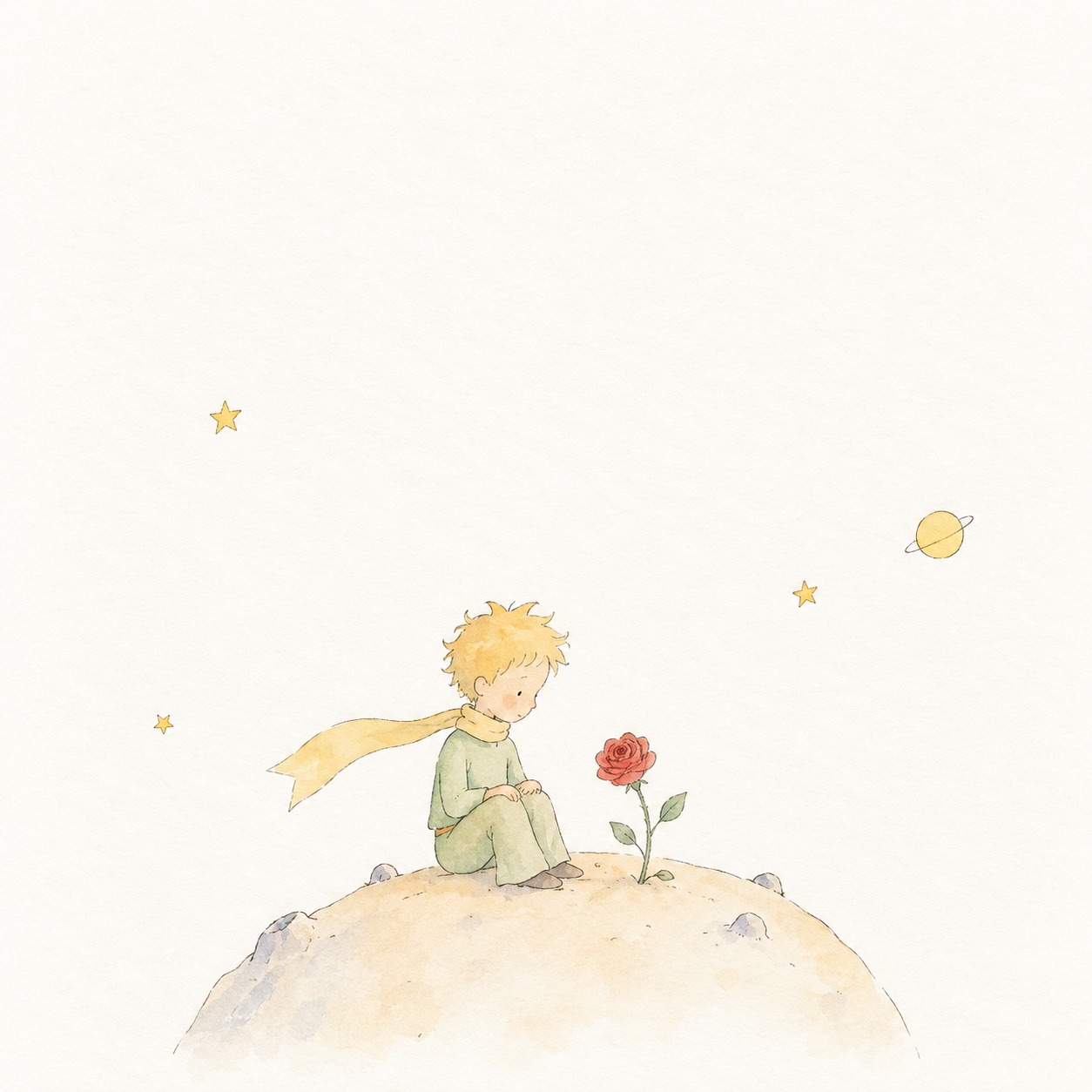
A style reference, not a generated result for your topic. Save reference image.
What defines this style?
Slightly uneven fine contours describe a small, naive figure. Transparent pale watercolor preserves luminous paper and softly feathered wet edges. Straw yellow, sage green and washed blue remain sparse; at least half of the composition is open paper. One quiet gesture and one or two objects convey companionship, waiting or inner feeling with tenderness, wistfulness and hope.
Customize your illustration prompt
Create a poetic watercolor illustration for an article.
Subject and scene: A person finding a quiet moment in a busy day

Visual language: Slightly uneven fine pencil or pale ink contours, a small naturally naive figure and only a few facial marks. Keep the gesture readable and understated rather than anatomically exact. Apply very transparent pale watercolor, retaining luminous paper, subtle paper grain, soft wet edges and occasional pigment pooling.
Palette and composition: Pale straw yellow, sage green and washed sky blue with sparse warm skin accents; no heavy dark masses. The subject occupies roughly one quarter to one third of the image, with at least half left as warm-white paper. Include only one or two relevant objects and do not fill the background.
Narrative and mood: Translate the subject into one quiet, visible gesture. Let distance between the figure and objects convey emotion: tender, childlike, contemplative, slightly wistful and hopeful, without a forced smile.
Constraints: Let the subject determine the characters and setting. Avoid heavy contours, opaque paint, harsh shadows, glossy 3D, huge anime eyes and decorative clutter. No numbers, signatures, watermarks or lettering unless the subject specifies an exact short phrase.No signup or generation credits required. Paste into your preferred image tool; results vary by model.
How to use this style
Start with one subject, one action and a setting. Keep the visual characteristics above, then change the scene to suit your story. For a fair comparison, use the same scene when trying another style.
The sample image is a reference for linework, palette and composition. Its characters and objects do not have to appear in your result. If your image tool accepts references, check its usage rules before uploading an image.
Read the illustration prompting guide for a worked example and ways to refine a result.